The Film Room · Case study
ThinkLinks
Teaches K–12 students how AI works. Every lesson is assembled on the spot for one student, based on how that student learns.
- school pilots
- students
- cost per student
00:00 · The problem
We live in Silicon Valley. Google, OpenAI, and Nvidia are basically in our backyard. Yet as juniors, we had zero AI classes. Hemant and I have been friends since we were kids, and while messing around with AI tools we realized how confusing it was even for us. If we were struggling, how prepared were younger students?
01:12 · The insight
Ask how a kid learns, not what they know.
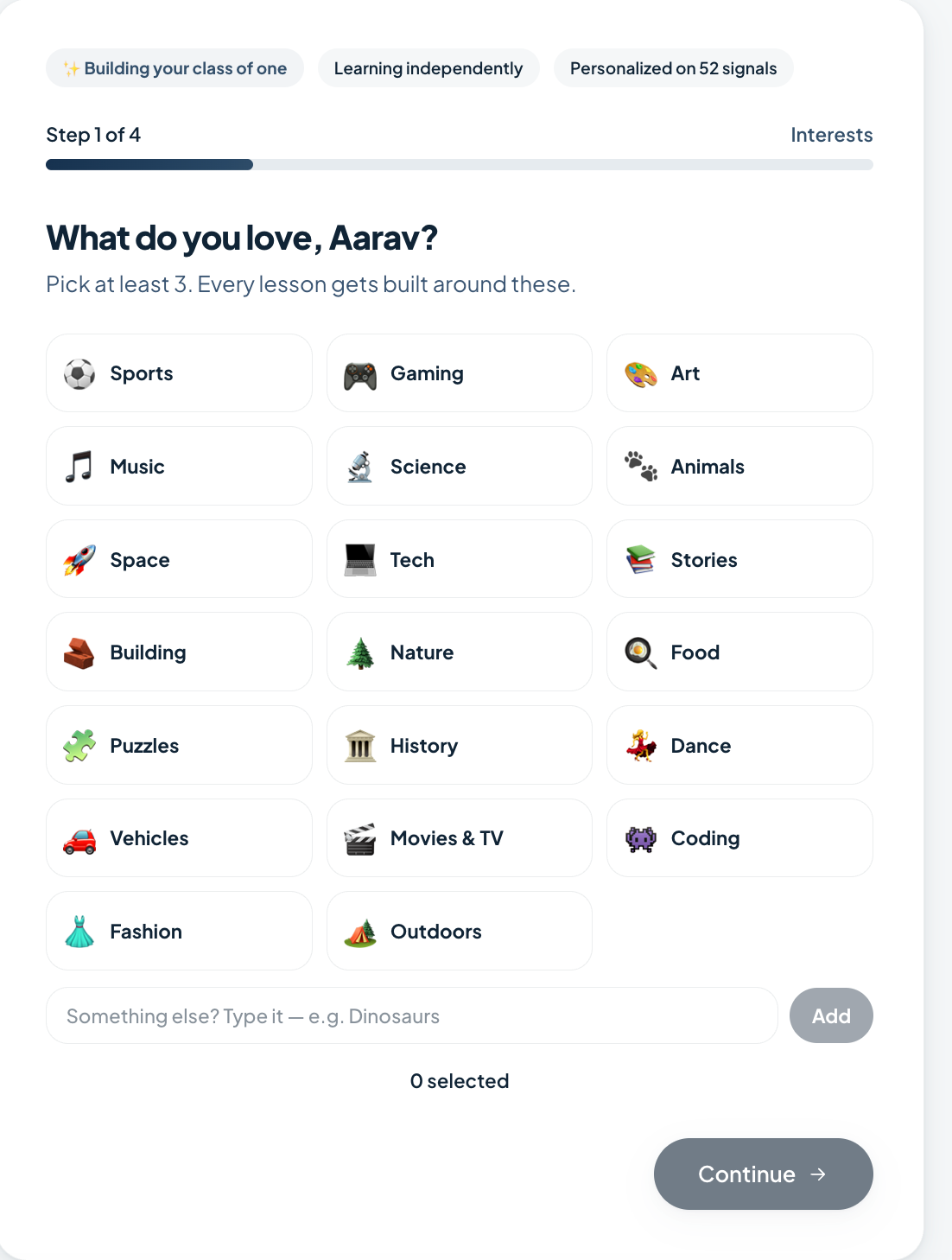
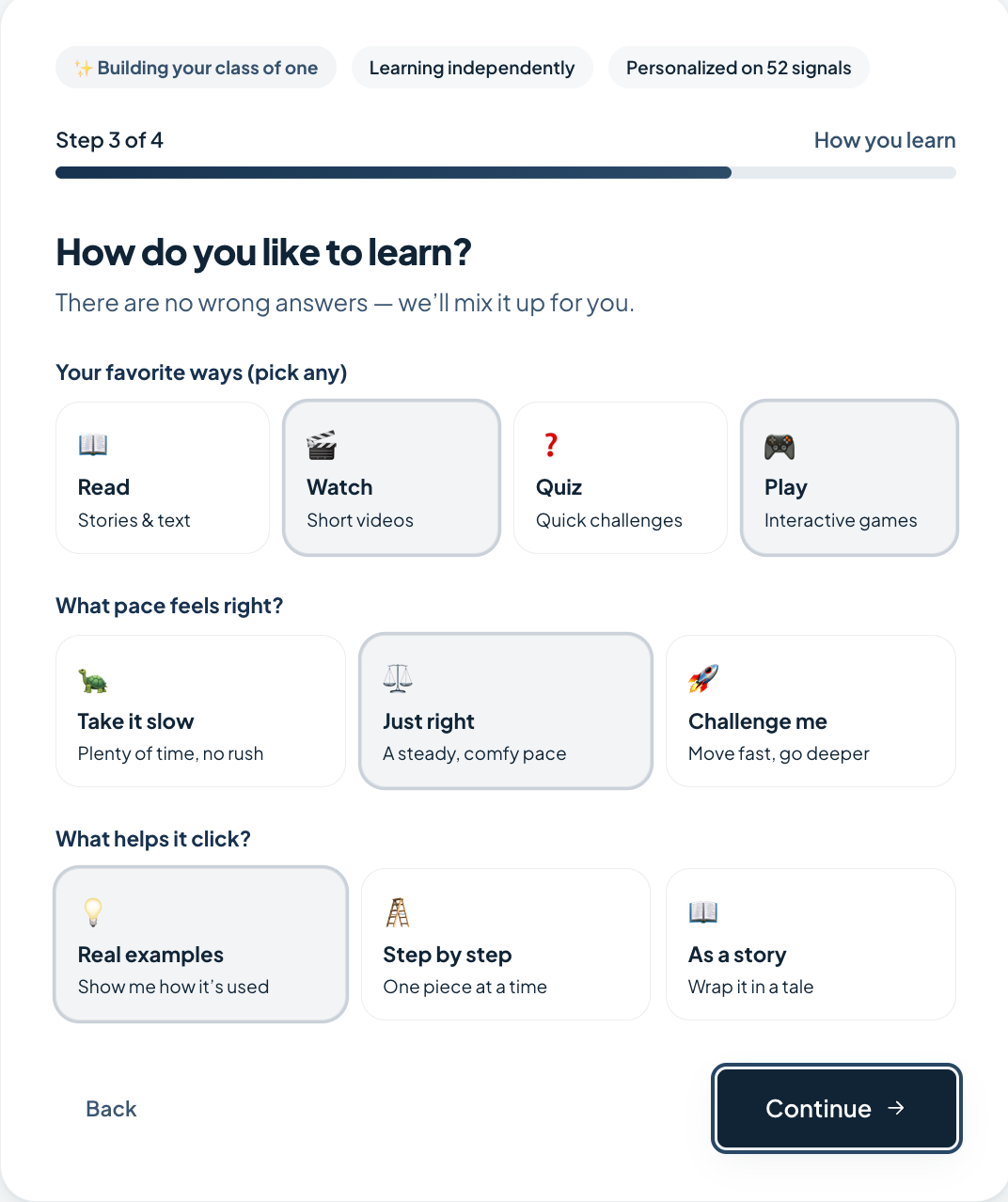
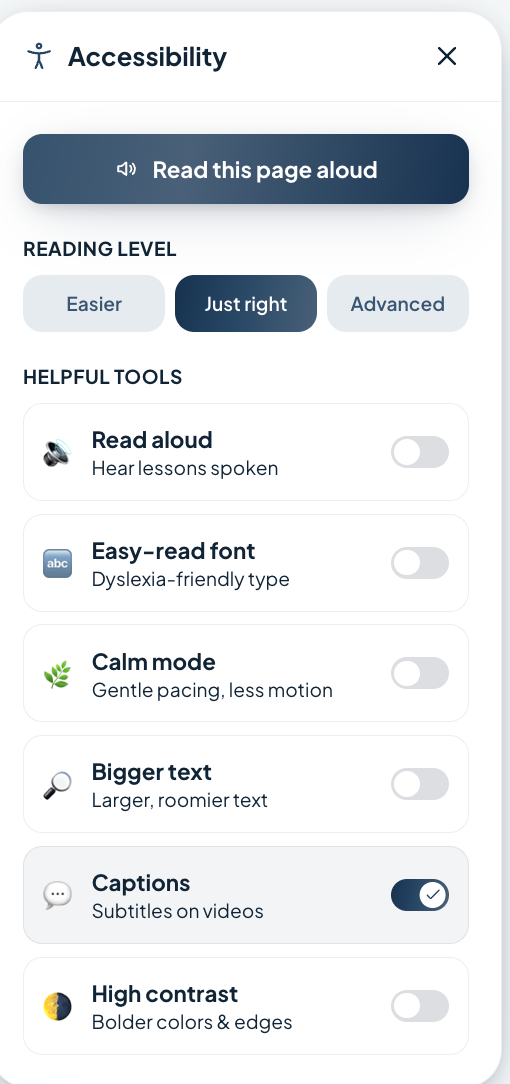
Asks how a student likes to learn — formats, pacing, language comfort, accessibility needs, interests — not what they already know.
Evolves with every action: replaying audio, skipping a video, getting stuck, leaving a lesson.
02:30 · The architecture
Three agents, one lesson
- 01OnboardingAsks how a student likes to learn — formats, pacing, language comfort, accessibility needs, interests — not what they already know.
- 02Learner profileEvolves with every action: replaying audio, skipping a video, getting stuck, leaving a lesson.
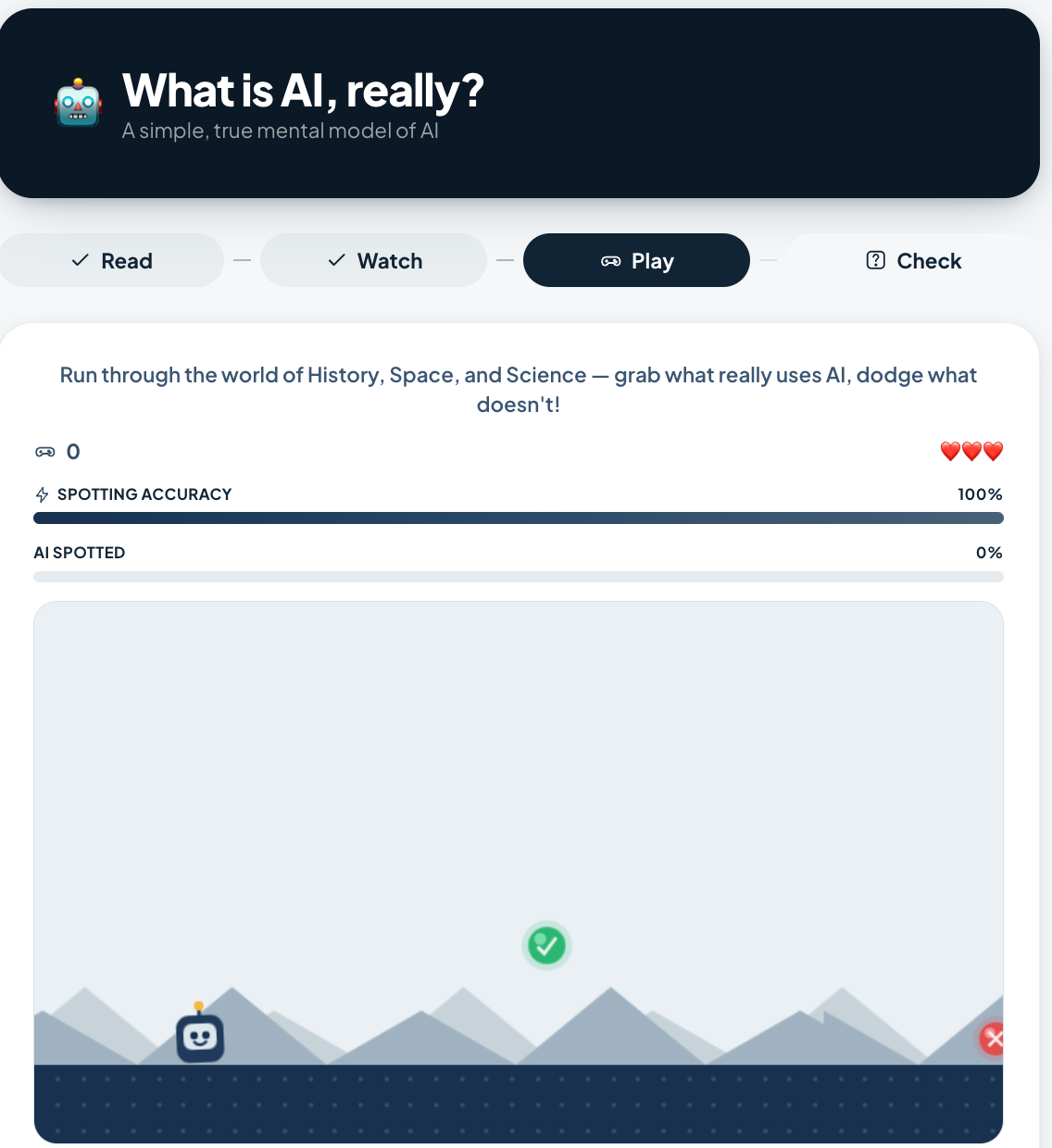
- 03Three agentsCurriculum agent picks the concept. Teaching agent picks the format — text, audio, visuals, simulations, games. Assessment agent runs low-pressure checks.
- 04The lessonAssembled live for one student, not pulled from a fixed library. Their next move feeds back into the profile.
03:45 · Pilot results
Three schools, 200+ students
Piloted in 3 schools with 200+ elementary and middle schoolers, parents, and teachers — plus families in India, where AI is taught earlier.
04:20 · What changed after feedback
- What we heard: early lessons still taught every student the same way.
- We reworked onboarding, the adaptive logic, formats, and accessibility.
- Teachers get a classroom dashboard of mastery and engagement.
05:10 · Business model
Free classroom trials convert to school and district licenses; parents subscribe at home.
- Represented the USA at the SAGE Global Entrepreneurship World Cup in Vietnam — Top 6 in the world.
- Mott Million Dollar Challenge semifinalist (top 60 of 3,700+, $7,750).
- 2nd at Ferris State’s Bulldog Pitch.
05:55 · The patent
First named inventor
U.S. provisional patent: disclosure-free adaptive accessibility.
- The full-stack product, from the ground up.
- The multi-agent system and its infrastructure.
- Technology, product direction, and business strategy as CTO.
06:30 · Press
07:05 · What’s next
Expanding to more schools and as many students as possible